
For a business owner in Tuscaloosa, a property disaster is more than just a physical mess: it is a direct threat to the bottom line. Whether it is a burst pipe in a retail space on University Boulevard or storm damage to a warehouse in Northport, the clock begins ticking the moment the damage occurs. Every hour your doors are closed represents lost revenue, displaced employees, and potentially lost customers who may turn to competitors.
In the wake of a flood, fire, or mold discovery, the pressure to "just get back to work" can lead to hasty decisions. However, commercial recovery requires a strategic, professional approach to ensure that the building is not only dry or clean but also safe for occupancy and compliant with health regulations. Understanding the logistics of commercial restoration can empower property managers and business owners to navigate these crises with confidence.
When a residential property suffers damage, the primary concern is comfort and safety. When a commercial property is affected, the scope expands to include liability and business continuity. In Tuscaloosa County, where local businesses form the backbone of the community, an extended closure can have a ripple effect.
Downtime is often the most expensive part of a disaster. Beyond the physical repair costs, businesses face:
To combat these risks, engaging an emergency restoration service in Tuscaloosa is the first step toward mitigation. Mitigation is the process of preventing further damage: stopping the water, boarding up the windows, or beginning the drying process immediately: to keep the ultimate restoration timeline as short as possible.
Before the professional crews arrive, there are critical steps you must take to protect your investment and streamline the recovery process.
Before assessing the inventory or equipment, ensure the safety of all employees and tenants. If there is standing water, the risk of electrical shock is high. If there has been a fire, structural integrity may be compromised. Always wait for a "clear" from local fire marshals or professional inspectors before re-entering a significantly damaged building.
Before any cleanup begins, take high-resolution photos and videos of the damage. This includes the source of the problem (like a failed water heater) and all affected assets, from office furniture to specialized machinery. Detailed documentation is the most powerful tool you have when filing a claim.
Time is the enemy of restoration. Mold can begin to colonize within 24 to 48 hours of moisture intrusion. A rapid response from a professional team can often save materials like drywall or carpeting that would otherwise need to be demolished if left untreated for several days.
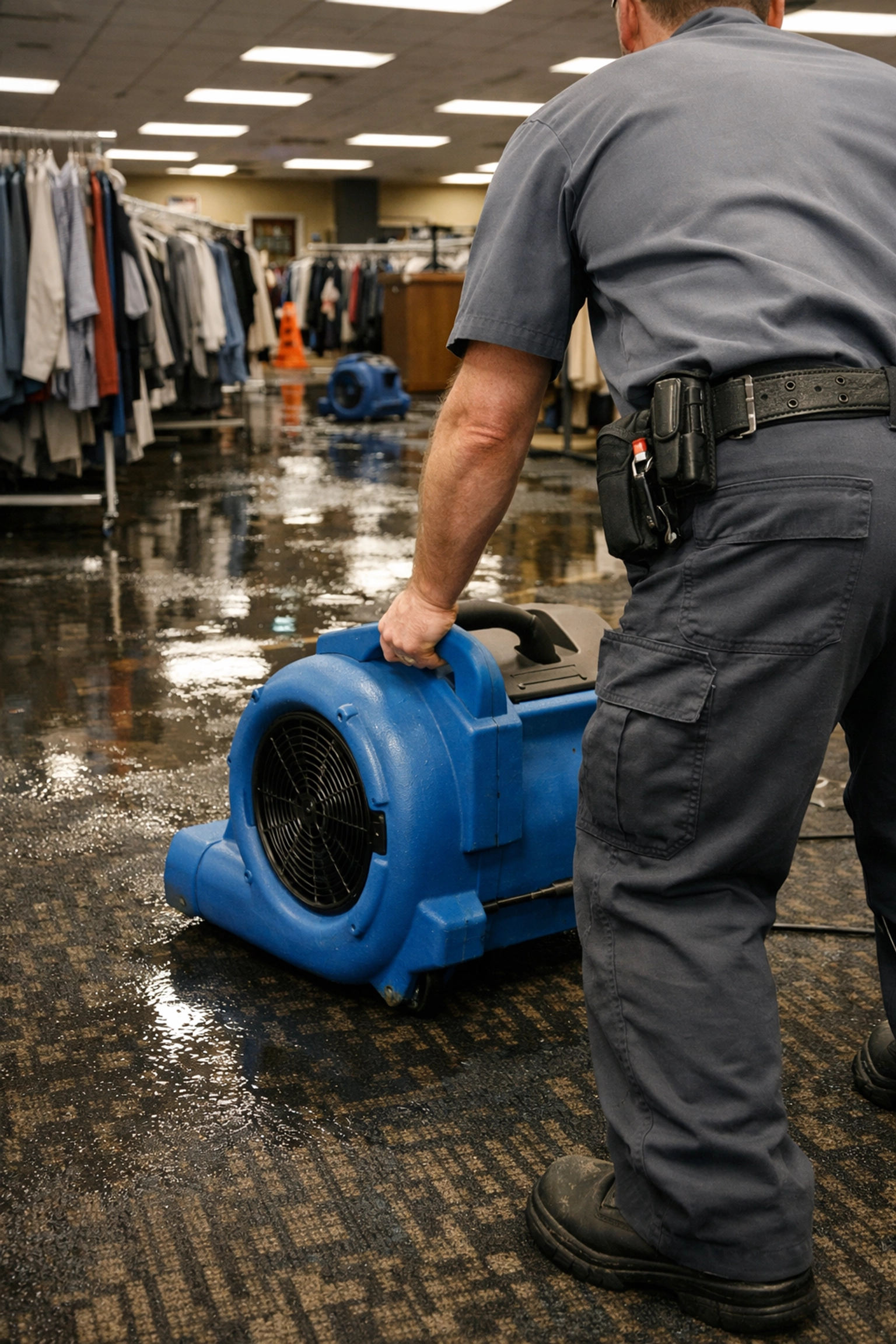
Commercial restoration is significantly more complex than residential work. Commercial buildings often utilize different construction materials, larger HVAC systems, and must adhere to stricter building codes.
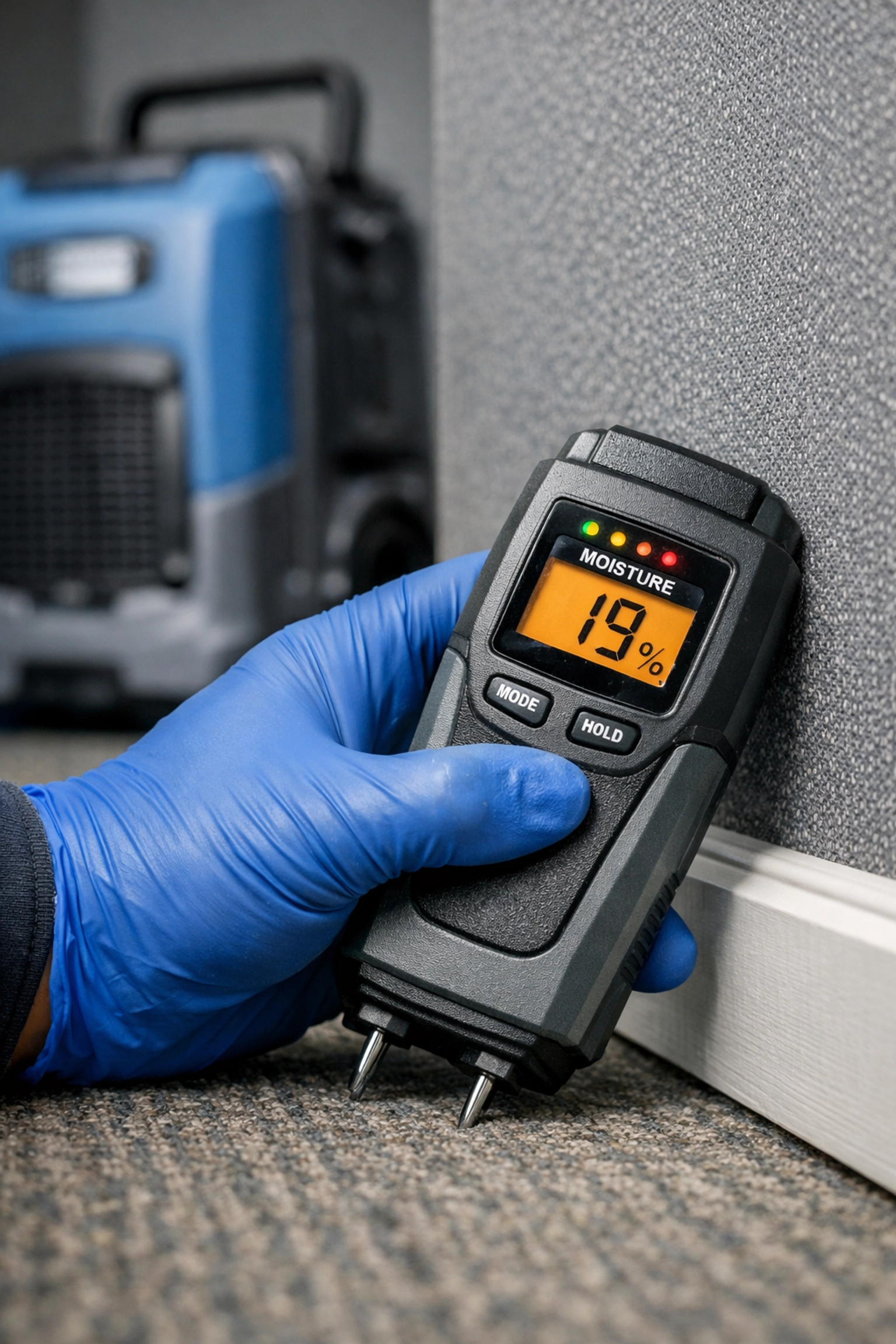
Water damage is rarely limited to what you can see on the surface. Professionals use thermal imaging cameras and moisture meters to track how water has traveled through wall cavities and subfloors. In a commercial setting, water can migrate through elevator shafts or plumbing chases, affecting multiple floors. Understanding the "moisture map" allows for a targeted drying strategy, which is much more efficient than traditional "tear out and replace" methods.
To stabilize the environment, restoration experts deploy LGR (Low Grain Refrigerant) dehumidifiers and high-velocity air movers. These units are designed to pull gallons of moisture out of the air and structural materials every day. For a business, this means getting the humidity levels back to a range where sensitive electronics and documents are no longer at risk.
Professional restoration is governed by the Institute of Inspection, Cleaning and Restoration Certification (IICRC). Following these standards: such as the S500 for water damage and the S520 for mold remediation: is vital for commercial properties to ensure they are legally and medically "clear" for re-entry. Using a certified team ensures that the work performed will stand up to the scrutiny of insurance adjusters and health inspectors. For more information on the specific risks of leaving damage unaddressed, you can read about the health risks associated with unaddressed water damage.
Recovering from a disaster often requires a significant capital injection. Fortunately, there are local and federal resources designed specifically for business owners in our area.
Navigating these financial hurdles while also managing a restoration project is a heavy lift. A reliable restoration partner will work directly with your insurance carrier, providing the necessary documentation and estimates to help your claim progress as quickly as possible.
The best way to get back on your feet fast is to have a plan in place before the disaster strikes. A Business Continuity Plan (BCP) serves as a roadmap for your leadership team.
In Tuscaloosa, our primary risks involve severe thunderstorms, flash flooding, and high humidity which can lead to rapid mold growth. Assess your building’s vulnerabilities. Is your server room in a basement prone to flooding? Are your roof drains cleared before the spring rain season?
You should not be searching for a "restoration company near me" while your lobby is underwater. Have the number for a trusted local restoration company in Tuscaloosa County saved in your phone and posted in common areas for property managers.
As seen in recent years, digital recovery is just as important as physical recovery. Ensure your business data is backed up to a secure, off-site cloud server. This allows your team to work remotely if the physical office is inaccessible during the restoration process. For Northport businesses specifically, specialized guidance can be found on navigating water damage restoration for commercial properties in Northport.
It may be tempting to have a maintenance crew handle a "small" leak or a "minor" smoke incident. However, commercial environments are prone to secondary damage. For example, soot from a small electrical fire contains acidic residues that can permanently etch glass and corrode metal within hours. If not professionally neutralized, the cost of replacing those fixtures will far exceed the cost of professional cleaning.
Furthermore, professional restoration companies use antimicrobial treatments and HEPA (High-Efficiency Particulate Air) filtration to ensure that the indoor air quality is safe. In a commercial setting, failing to address these microscopic threats can lead to long-term liability issues and "sick building syndrome."
When disaster strikes your business, you need a partner who understands that every minute matters. Restoration 1 of Tuscaloosa is committed to helping our local business community stay resilient. We combine technical expertise with a deep understanding of the Tuscaloosa landscape, ensuring that your recovery is handled with the professionalism and urgency it deserves.
We specialize in high-efficiency drying, smoke and soot removal, and comprehensive mold remediation tailored to the needs of commercial properties. Our goal is to minimize your downtime and restore your property to its pre-loss condition: or better.
If you are facing property damage or want to establish a relationship with a reliable recovery team before an emergency occurs, reach out to us. We are proud to serve Tuscaloosa, Northport, and the surrounding areas, providing 24/7 support when our neighbors need it most.
Don't let a disaster stop your momentum. Contact Restoration 1 of Tuscaloosa today to get your business back on track.