
It usually starts with a faint, earthy scent that you only notice when you first walk through the front door. You might light a candle, crack a window, or spray some air freshener, thinking it is just a bit of "stale air" from a humid Alabama afternoon. But a few days later, the smell is still there. In fact, it seems stronger.
If you are a homeowner in Tuscaloosa or Northport, you are no stranger to moisture. Between our heavy spring rains and the thick, sweltering humidity that defines a West Alabama summer, our homes are constantly under siege by water vapor. When that moisture finds a dark, unventilated corner of your property, mold doesn't just knock: it moves in.
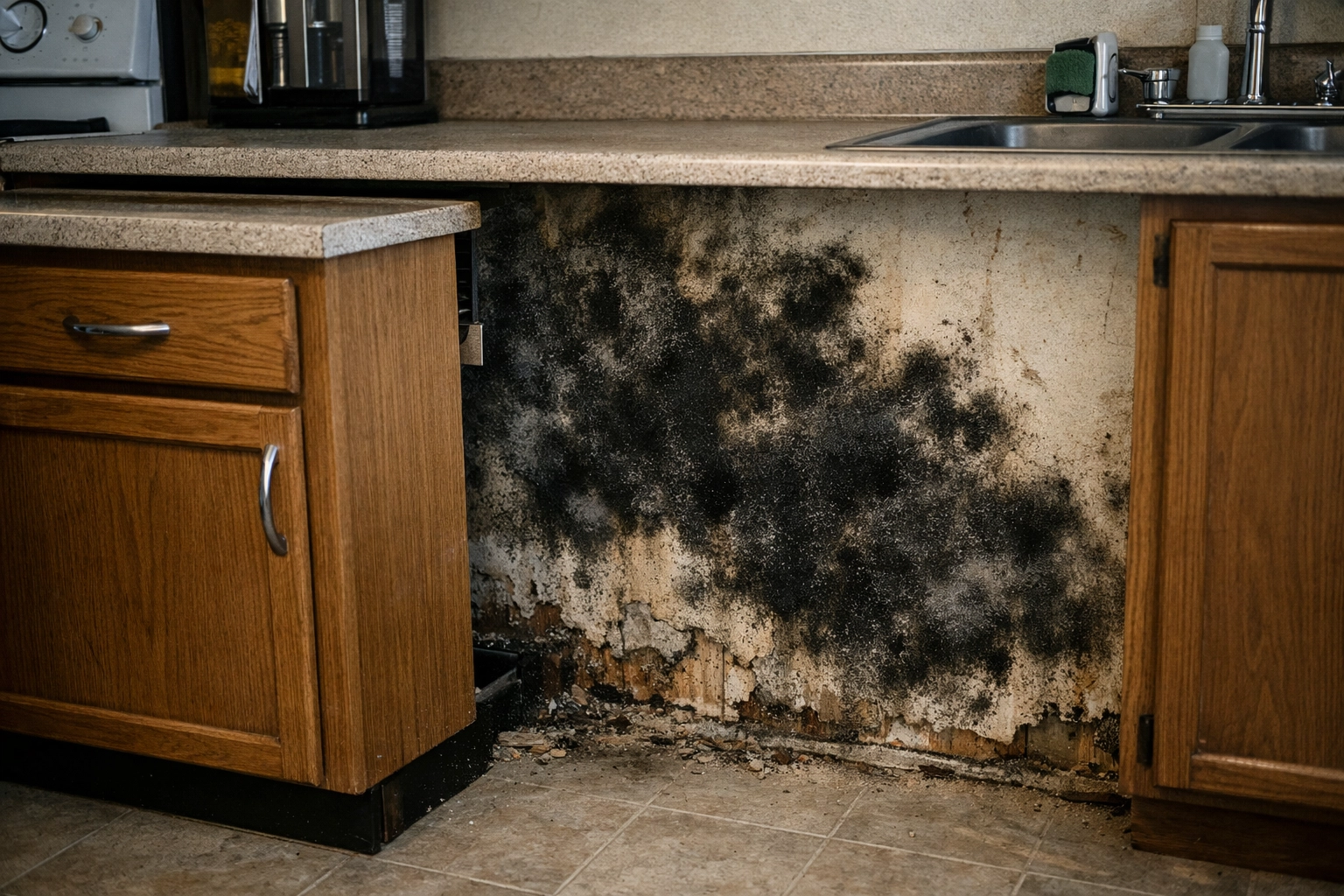
Identifying hidden mold is one of the most challenging aspects of property maintenance. Because mold often grows behind drywall, under floorboards, or inside HVAC systems, it can remain undetected for months while quietly compromising your home's structural integrity and your family's health. Understanding the early warning signs is the first step toward effective mold removal in Tuscaloosa.
The most common indicator of hidden mold is a lingering, musty smell that refuses to dissipate. This isn't just a "dirty laundry" scent; it is a chemical byproduct of mold growth. As mold colonies expand, they release Microbial Volatile Organic Compounds (MVOCs). These compounds are the gaseous waste products of the mold’s digestive process.
How can you tell if the smell is a problem?
Your body is often a more sensitive mold detector than any moisture meter. Mold spores are microscopic and easily inhaled. If you or your family members are experiencing "allergy-like" symptoms that don't seem to have a cause, you may be dealing with a hidden infestation.
Key signs that your symptoms are related to mold remediation in Tuscaloosa, AL needs include:
If these symptoms persist, it is important to evaluate the health risks associated with unaddressed water damage, as mold is a primary consequence of secondary water issues.
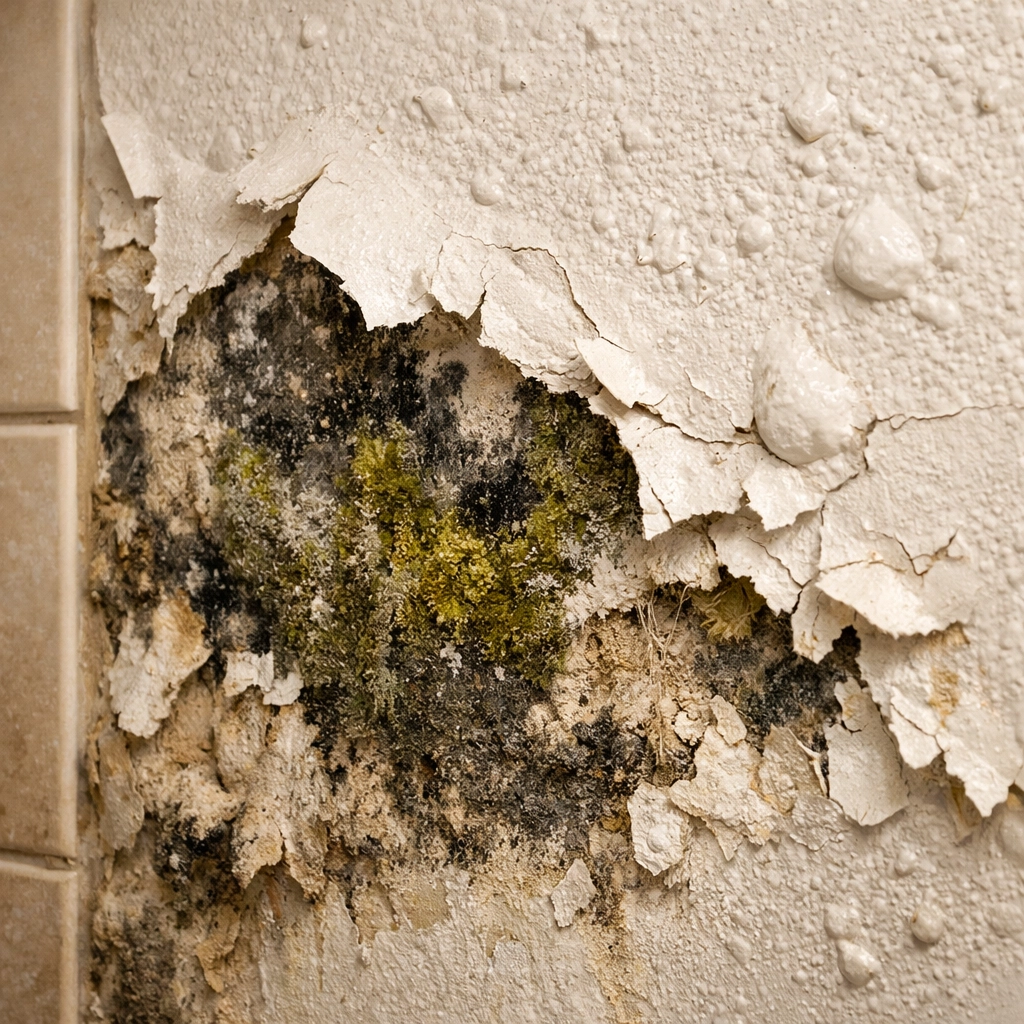
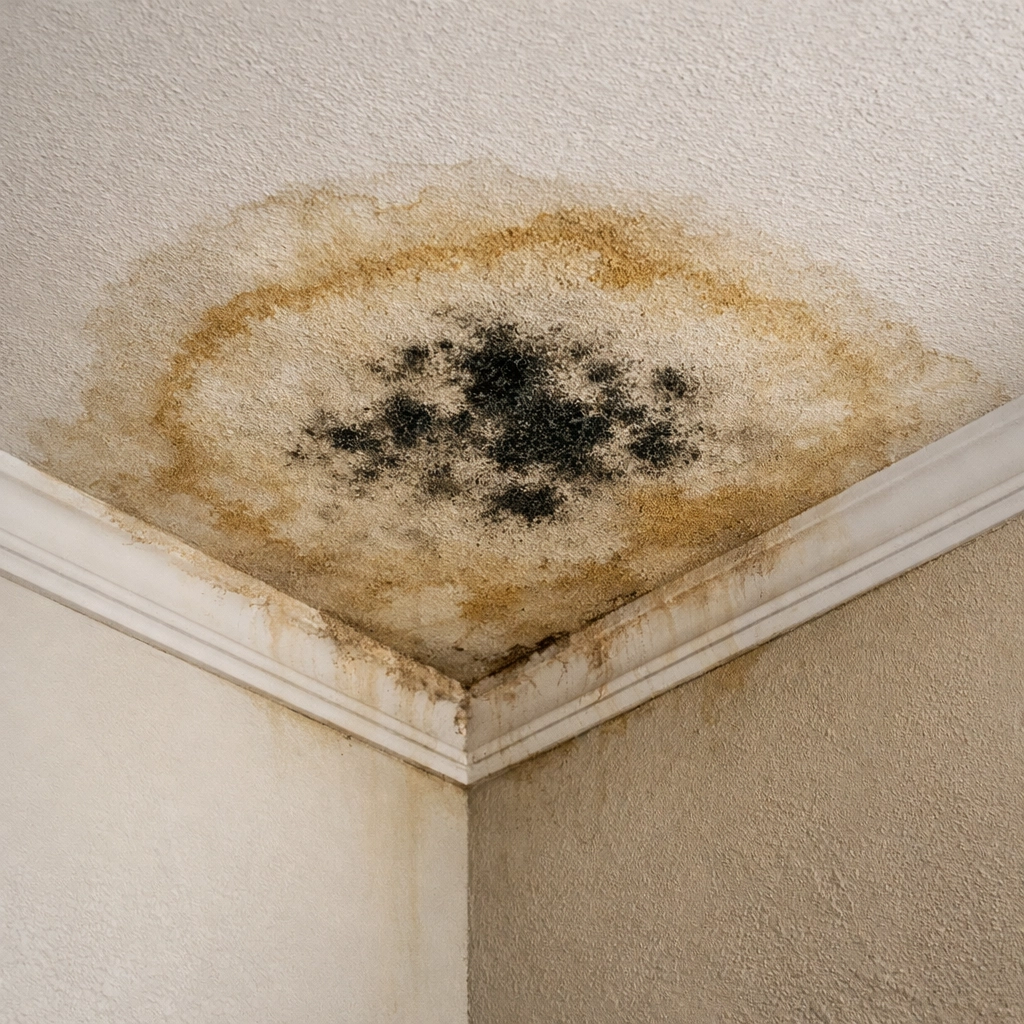
While the main colony might be hidden, it often leaves breadcrumbs on your walls and ceilings. Homeowners often overlook these as minor cosmetic issues, but they are frequently the first signs of mold after water damage.
Look for these subtle changes in your home’s surfaces:
In Tuscaloosa, the outdoor humidity is often high, but your home should be a sanctuary of dry air. If your indoor environment feels "heavy" or "sticky," you are creating a petri dish for mold growth.
Mold thrives when indoor humidity levels consistently exceed 60%. You should monitor your home for:
If your home has experienced any form of water intrusion in the last six months: even a minor one: your risk of hidden mold increases exponentially. Mold can begin to grow within 24 to 48 hours of a water event.
Did you experience any of the following?
If you have had a past incident, it is wise to revisit our water damage services to ensure the structural drying was handled completely.
Our local environment plays a significant role in mold development. Tuscaloosa sits in a humid subtropical climate. We deal with high heat, high moisture, and a long growing season. Furthermore, the soil in our area: noted for its high clay content: does not drain as quickly as sandy soils found further south. This means that after a heavy rain, the ground around your foundation stays saturated longer, increasing the pressure of moisture against your basement or crawl space walls.
When homeowners spot a bit of mold, the first instinct is often to reach for a bottle of bleach. However, this can actually make the problem worse. Bleach is mostly water; while the chlorine may kill the mold on the surface, the water soaks into porous materials like drywall or wood, effectively "watering" the mold roots (hyphae) that are hidden deep inside.
Professional mold removal in Tuscaloosa requires a more scientific approach, involving:
Ignoring a musty smell or a small water stain is a gamble. What starts as a small patch of hidden mold can quickly evolve into a major structural issue that requires extensive demolition and reconstruction. More importantly, the longer you live with hidden mold, the more you expose your family to potential respiratory issues.
If you suspect your home has a hidden mold problem, don't wait for the symptoms to get worse. At Restoration 1 of Tuscaloosa, we understand the stress of property damage. We are a local team that knows the specific challenges of Alabama homes, and we are committed to restoring your property: and your peace of mind: with care and precision.
Whether you need a professional inspection or full-scale mold remediation in Tuscaloosa, AL, we are here to help. Our team uses industry-leading technology to find moisture where it hides and eliminate mold at its source.
Don't let a musty smell turn into a major headache. Contact Restoration 1 of Tuscaloosa today at our contact page or visit our service area page to see how we can help you breathe easier in your own home.